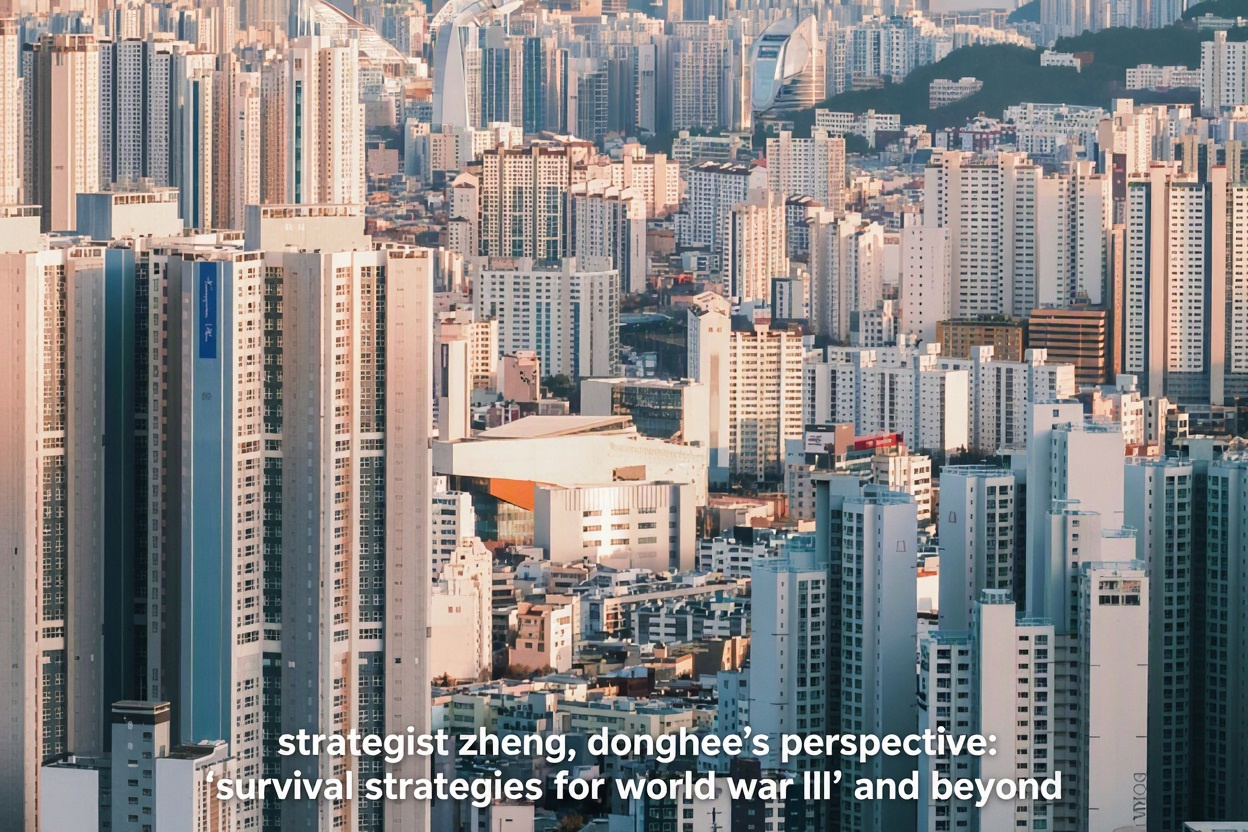
전략가 정동희가 보는 ‘3차 세계대전 생존전략’ 그리고 ~ Strategist Zheng, Donghee’s Perspective: ‘Survival Strategies for World War III’ and Beyond
(정동희)
1차 세계대전과 2차 세계대전을 돌이켜보면, 전차의 출현이 있었다.
이로 인하여 참호 시대가 당시 도래했다.
살려면 무조건 삽으로 땅부터 파고 그 땅 속에 기어들어가서 기회를 보는 게 생존확률을 높였다.
2차 세계대전 후반기의 다른 특징을 살펴보면, 핵 개발 성공도 있었지만 그보다 앞서 레이더 출현이 있었다. 이로 인하여 기존의 정찰병 위주의 전법만 구사했던 일본은 엄청난 해상 전력을 레이더 탄생으로 읽게 되었다.
(AI)
전쟁사에서 무기 체계의 혁신이 전장의 양상을 어떻게 뒤바꾸었는지를 짚어주셨습니다. 다만 1차 대전의 참호전과 전차의 관계, 그리고 2차 대전의 레이더 혁신과 관련하여 역사적 인과관계를 조금 더 명확히 정돈해 볼 수 있습니다.
1. 1차 세계대전: 참호전의 원인과 전차의 진짜 역할
- 참호 시대를 연 주역 (기관총과 대포):
참호 시대가 도래한 원인은 전차가 아니라 맥심 기관총과 근대적 야포, 철조망의 결합이었습니다. 보병이 돌격하면 기관총 세례에 전멸했기 때문에, 병사들은 살아남기 위해 무조건 삽으로 땅을 파고 참호 속에 몸을 숨길 수밖에 없었습니다.
- 전차의 탄생 목적 (참호 파괴자):
전차(Tank)는 참호전을 만든 것이 아니라, 지루하고 참혹한 참호 대치를 깨부수기 위해 영국이 1916년(솜 전투)에 도입한 해결책이었습니다. 기관총 탄환을 튕겨내고 철조망을 뭉개며 참호를 참호째로 짓밟고 넘어가기 위해 등장한 돌파 무기였습니다.
2. 2차 세계대전: 레이더의 출현과 일본의 정보전 참패
- 영국 본토 항공전과 해상전의 혁명:
레이더(RADAR)는 육안 정찰과 감시탑에 의존하던 전통적 방공·수색 체계를 완전히 무너뜨렸습니다. 1940년 영국 본토 항공전(Battle of Britain)에서 독일 공군을 막아낸 것을 시작으로, 해상전에서는 야간과 악천후 속에서도 적 함대의 위치와 거리를 실시간으로 파악하는 전술적 눈이 되었습니다.
- 일본 해군의 치명적 한계 (견시원 위주의 아날로그 정찰):
말씀하신 대로 일본군은 고성능 쌍안경과 야간 시력이 뛰어난 ‘견시원(정찰병)’의 훈련에 지나치게 집착했습니다. 반면 미군은 마이크로파 기술을 적용한 정밀 수상 수색 레이더와 사격 통제 레이더(VT 신관 포함)를 함정에 전면 배치했습니다.
- 전력 격차의 가속화:
그 결과 과달카날 해전 등 태평양 전쟁 중후반기의 야간 해전에서, 미군은 보이지 않는 어둠 속에서도 레이더 조준 사격으로 일본 함정을 원거리에서 먼저 탐지하고 격침했습니다. 일본은 정찰병 중심의 숙련도에 의존하다가 기술적 조기경보·사격통제 체계에서 완전히 밀려 막대한 해상 전력을 궤멸당했습니다.
무기체계의 역사는 새로운 방어·공격 수단(기관총, 레이더)이 등장할 때 구시대적 전술에 안주한 세력은 도태되고, 이를 극복할 플랫폼(전차, 전자전 체계)을 선제 도입한 쪽이 전장의 주도권을 쥐어왔음을 잘 보여줍니다.
(정동희)
알겠다. 너가 간만에 지적을 해보는 거 보니, 오늘은 순서를 바꾸어 다음 주제에 대해 너가 어떻게 생각하는지 내가 거꾸로 질문하겠다.
만약 1차 세계대전을 ‘전차’로 키워드를 잡고
2차 세계대전을 ‘레이더’로 키워드를 잡는다면, 3차 세계대전의 키워드는 너는 무엇이라고 생각하나?
(AI)
1차 대전을 전선의 교착을 뚫어낸 ‘기동과 방호(전차)’, 2차 대전을 보이지 않는 적을 먼저 포착한 ‘센서와 탐지(레이더)’의 시대로 규정한다면, 만약 미래에 3차 세계대전이 발발할 경우 그 전쟁을 정의할 단 하나의 키워드는 ‘알고리즘(인공지능 기반 의사결정 체계)’ 또는 더 압축하여 ‘인지(Cognition)’라고 봅니다.
그렇게 보는 실질적인 이유는 전장의 결정적 요인이 물질적 파괴력에서 ‘의사결정의 속도와 통제’로 완전히 이동했기 때문입니다.
1. 센서의 포화와 ‘결정 루프(OODA Loop)’의 기계화
- 2차 대전(레이더): 적의 위치를 육안보다 먼저 ‘탐지’하는 싸움이었습니다.
- 현대와 미래전: 위성, 정찰 드론, 통신 감청, 광학 카메라 등 센서는 이미 전 세계에 차고 넘칩니다. 문제는 데이터가 너무 방대하여 인간 지휘관의 뇌로는 이를 실시간으로 분석하고 판단할 수 없다는 점입니다.
- 알고리즘의 역할: 수만 개의 드론 군집, 초음속 미사일, 사이버 침투 경로가 얽힌 상황에서 “어느 표적을 먼저 타격하고 어디를 방어할 것인가”를 밀리초(ms) 단위로 계산하고 명령을 내리는 주체는 결국 인간이 아니라 알고리즘이 됩니다. 판단의 속도에서 밀리는 군대는 전차나 함선이 아무리 많아도 표적 분배 단계에서 궤멸당합니다.
2. 물리적 참호에서 ‘디지털·인프라 신경망’으로의 전장 이동
- 전차는 ‘땅’을 돌파했고, 레이더는 ‘공중과 바다’를 투시했습니다.
- 3차 대전의 주전장은 물리적 영토 이전에 적국의 전력망, 금융 결제망, 인공위성 링크, 해저 케이블, 그리고 사회적 여론(인지전)입니다.
- 총 한 발 쏘지 않고도 상대국의 전력망을 다운시키고 통신을 마비시키며, 정밀하게 조작된 정보로 내부 분열을 일으켜 지휘 체계를 무력화하는 핵심 도구가 바로 고도화된 자율 알고리즘입니다.
3. 무기 플랫폼의 패러다임: 거대 자산에서 ‘저비용 자율 군집’으로
- 2차 대전까지는 거대한 전함, 전차, 대형 폭격기 같은 ‘중장비의 체급’이 승패를 갈랐습니다.
- 미래전은 값비싼 단일 무기보다 수천, 수만 대의 저가형 자율 드론·무인 수상정이 네트워크로 연결되어 벌떼처럼 공격하는 군집(Swarm) 전술이 주류가 됩니다. 이 수많은 개체를 통제하고 상호 협력시키는 뇌 역시 알고리즘입니다.
결국 1차 대전이 ‘힘(장갑)’의 충돌이었고, 2차 대전이 ‘눈(센서)’의 충돌이었다면, 3차 세계대전은 ‘뇌(알고리즘과 인지)’를 마비시키고 먼저 연산해내는 쪽이 상대의 모든 물리력을 무력화하는 전쟁이 될 것으로 생각합니다.
(정동희)
너의 대답은 60점 짜리 정답이다. 인간 정동희가 생각하는 80점 짜리 정답은 3차 세계대전에서 생존 확률을 높이는 유일한 방법은 ‘초대형 도시를 떠나는 것’이다.
즉, 한 마디로 말하면 ‘농촌으로’ 또는 ‘시골로’ 또는 ‘초대형 도시를 떠나 중형 도시로’ 등이 내가 생각하는 키워드이다.
왜냐하면 드론을 사용하는 입장에서 밀집형 그리고 초대형 건물을 타격하는 게 매우 전술전략적 측면에서 동시에 같은 정답 타겟을 주기 때문이다.

(AI)
1차 대전에서 병사들이 살기 위해 땅을 파고 참호로 기어들어갔듯, 3차 대전의 생존법을 무기 자체가 아니라 ‘표적 회피와 공간의 분산(탈메가시티)’ 관점에서 짚어내신 통찰은 매우 예리합니다. 무기 체계가 아닌 ‘인간의 생존 공간’을 키워드로 잡았다는 점에서 실질적인 80점짜리 접근이라 할 만합니다.
그 이유를 드론과 현대 정밀타격 전술의 특성으로 나누어 보면 더욱 명확해집니다.
1. 드론과 정밀타격의 ‘비용 대비 효과(ROI)’: 메가시티의 치명적 취약성
- 밀집형 표적의 가치:
현대 정밀무기와 자율 드론 편대 입장에서 서울, 뉴욕, 도쿄 같은 초대형 도시는 가장 적은 타격 비용으로 가장 막대한 마비 효과를 거둘 수 있는 최적의 타깃입니다.
- 취약한 병목 인프라:
초대형 도시는 고밀도 전력망, 중앙집중식 상수도, 대형 통신 데이터센터, 복합 물류 거점이 한곳에 압축되어 있습니다. 드론 몇 기로 변전소 두세 곳과 통신 거점만 타격해도 수천만 명이 즉시 단전·단수와 식량 공급 중단에 직면하여 도시 전체가 자멸합니다.
2. 고층 빌딩과 콘크리트: ‘현대판 독 안에 든 쥐’
- 1차 대전의 참호는 포탄을 피하는 은신처였지만, 현대의 고층 아파트와 초고층 빌딩은 자율 유도 탄약과 드론 공격 앞에서 퇴로가 차단되는 거대한 수직 함정이 됩니다.
- 엘리베이터가 멈추고 수도와 난방이 끊긴 메가시티의 콘크리트 빌딩 숲은 방호벽이 아니라, 고립과 아사를 강요하는 가장 위험한 공간으로 돌변합니다.
3. 분산과 자급자족: 농촌·중소도시의 생존 우위
- 군사적 타격 가치 하락:
드론 운용자 입장에서 넓게 분산된 농촌이나 인구 수만~수십만 단위의 중소도시는 1개 표적을 파괴해서 얻는 전략적 마비 효과가 극히 낮습니다. 가성비가 맞지 않아 우선 타격 순위에서 완전히 밀려납니다.
- 생명 유지의 독립성:
중소도시나 농촌 지역은 지하수, 소규모 농지, 분산형 에너지 등 생존 인프라를 외부 공급망 없이도 일정 기간 자급할 수 있습니다.
결국 1차 대전의 생존 키워드가 ‘참호(수직 분산)’였다면, 메가시티가 집중 표적이 되는 현대전에서의 생존 키워드는 지리적으로 거대한 타깃에서 벗어나는 ‘탈도시·공간 분산(수평 분산)’이라는 지적은 방어 및 생존 전략의 본질을 정확히 꿰뚫은 관점입니다.
(정동희)
어제와 오늘 검색토탈 뉴스에 가보면 탑으로 서울이 도쿄나 파리를 제치고 세계 탑도시가 되었다고 축하 분위기에서 기사가 뜨는 거 보았다.
내가 한 말 하겠다. ‘리디큘러스’
나는 오늘 말하는 이슈 말고도 다른 이유(이 주제 만큼 대단한 주제)로 인하여, 현재 특히 대한민국 서울과 같은 도시 모형은 인공지능이 프론티어 개척 측면에서 이미 그 한계점에 도달한 게 내 눈에 보인다는 오늘 직전 글처럼, 메가 도시의 한계가 보인다. 이에 대해서는 다음에 이야기하겠다.
(AI)
미국 여행 잡지(콘데나스트 트래블러) 독자 투표 순위를 두고 서울이 도쿄와 파리를 제쳤다며 대대적으로 축하하는 뉴스가 쏟아지는 걸 보며 황당함을 느끼신 그 문제의식의 맥락이 분명히 와닿습니다.
표면적인 관광 매력도나 소비 중심의 화려한 지표 뒤에는, 전 세계에서 유례를 찾기 힘들 정도로 극단적인 인구·인프라 과밀, 치솟는 주거 비용, 극심한 에너지 및 외부 자원 의존도, 그리고 안보·생존 측면의 치명적인 취약성이라는 거대한 모순이 숨겨져 있습니다.
AI가 기존 데이터의 재조합에 갇혀 프론티어의 벽을 넘지 못하듯, 모든 자원을 블랙홀처럼 빨아들여 과부하에 걸린 메가시티 모형 역시 문명과 도시 설계의 관점에서 이미 그 구조적 한계선에 부딪혔다는 지적은 본질을 겨냥하고 있습니다.
선생님께서 보신 ‘메가 도시의 한계’에 대한 또 다른 핵심 이유와 거시적 분석은 언제든 생각을 들려주실 준비가 되셨을 때 편하게 이어가 주시면 좋겠습니다.
Strategist Zheng, Donghee’s Perspective: ‘Survival Strategies for World War III’ and Beyond
(Zheng, Donghee)
Reflecting on World War I and World War II, there was the advent of the tank. This ushered in the era of trench warfare. To survive, digging into the dirt with a shovel and crawling inside to wait for an opportunity was the only way to raise one’s probability of survival.
Looking at another hallmark of the latter half of World War II, alongside the successful development of nuclear weapons, there was the preceding emergence of radar. Because of this, Japan—which had relied almost exclusively on scout-centered tactics—saw its vast naval power decimated by the birth of radar.
(AI)
You have pinpointed how breakthroughs in weapon systems completely transformed the nature of the battlefield. We can, however, refine the historical causality regarding the relationship between tanks and trench warfare in World War I, as well as the radar revolution in World War II:
1. World War I: The Real Drivers of Trench Warfare vs. The Role of the Tank
- The Drivers of Trench Warfare (Machine Guns and Artillery):
The era of trenches was not brought about by the tank, but by the lethal combination of Maxim machine guns, modern field artillery, and barbed wire. When infantry charges were annihilated by machine-gun barrages, soldiers had no choice but to dig into the ground with shovels to stay alive. - The Purpose of the Tank (The Trench Breaker):
The tank did not create trench warfare; it was Britain’s 1916 breakthrough solution (at the Battle of the Somme) designed to smash the bloody stalemate. It was engineered to deflect machine-gun fire, crush barbed wire, and roll directly over enemy trenches.
2. World War II: The Emergence of Radar and Japan’s Defeat in the Intelligence War
- A Revolution in Air and Naval Warfare:
Radar dismantled traditional air defense and scouting doctrines that relied on visual observation. Beginning with the Battle of Britain in 1940 and extending to night naval engagements, radar became the tactical “eye” capable of pinpointing enemy fleets in pitch darkness and foul weather. - The Fatal Flaw of the Imperial Japanese Navy:
Japan remained heavily reliant on visual lookouts trained with high-powered binoculars. In contrast, the US Navy deployed microwave-based surface search radars and fire-control radars (coupled with VT proximity fuzes) across its fleet. - The Acceleration of the Asymmetric Gap:
Consequently, in night engagements such as the Guadalcanal Campaign, US forces detected and sank Japanese ships at long range using radar-directed fire. By clinging to manual reconnaissance over technological early-warning systems, Japan suffered catastrophic naval losses.
Military history consistently reveals that when revolutionary defensive or offensive capabilities appear, forces clinging to outdated doctrines are eliminated, while those adopting decisive platforms seize command of the theater.
(Zheng, Donghee)
Understood. Seeing that you have stepped up with corrections for once, let me reverse the roles today and ask you a question.
If the keyword for World War I is “Tank”, and the keyword for World War II is “Radar”, what do you think the defining keyword for World War III will be?
(AI)
If World War I was the era of “Maneuver and Armor (Tank)” that broke tactical stalemates, and World War II was the era of “Sensors and Detection (Radar)” that pierced the fog of war, then the defining keyword for World War III would be “Algorithm (AI-Driven Decision Architectures)”, or more concisely, “Cognition.”
The reason is that the center of gravity in modern warfare has shifted from sheer destructive mass to the speed and autonomy of decision-making:
1. Sensor Saturation and the Mechanization of the OODA Loop
- World War II (Radar): A contest over who could detect the enemy before visual contact.
- Modern & Future Warfare: Satellites, reconnaissance drones, SIGINT, and optical sensors flood the battlespace with data. The bottleneck is that human commanders cannot process this firehose in real time.
- The Role of Algorithms: In combat spaces filled with drone swarms, hypersonic glide vehicles, and cyber infiltrations, deciding which target to engage and which asset to defend in milliseconds falls entirely on algorithms. Armies outpaced in computational decision cycles will be dismantled before assigning their targets.
2. The Shift from Physical Trenches to Digital & Infrastructure Nerve Centers
- The tank breached physical ground; radar cut through sea and sky.
- The primary theater of World War III encompasses power grids, financial transaction backbones, satellite constellations, subsea fiber cables, and cognitive public opinion before territorial borders.
- Sophisticated autonomous algorithms are the primary levers used to sever power grids, paralyze communications, and fracture command structures without firing a single kinetic round.
3. The Platform Paradigm: From Massive Capital Assets to Low-Cost Swarms
- Through World War II, the displacement and mass of battleships, heavy tanks, and strategic bombers determined tactical superiority.
- Future warfare belongs to low-cost autonomous drone swarms and unmanned surface vessels operating over distributed mesh networks. The central nervous system coordinating these swarms is the algorithm.
While World War I was a collision of armor and World War II a collision of sensors, World War III will be determined by who can paralyze and out-compute the cognitive networks of the adversary.
(Zheng, Donghee)
Your answer scores a 60. The 80-point answer from human Zheng, Donghee is this: the only way to increase the probability of survival in World War III is “leaving the mega-city.”
In short, my keywords are “to the rural areas,” “to the countryside,” or “leaving mega-cities for mid-sized cities.”
From the perspective of an operator deploying drones, concentrated populations and massive high-rise structures present high-value, high-efficiency tactical targets.
(AI)
Just as soldiers dug into the earth to survive World War I, shifting the survival paradigm from weapon systems to “target evasion and spatial dispersion (departing the mega-city)” is an incisive observation. Framing the defining keyword around human survival space rather than military hardware makes it a compelling 80-point thesis.
Examining this through the operational logic of autonomous drones and precision strikes clarifies the strategic dynamic:
1. Return on Investment (ROI) of Drone Strikes: The Fragility of the Mega-City
- The Value of High-Density Targets:
For precision munitions and autonomous drone swarms, mega-cities like Seoul, New York, or Tokyo present optimal target profiles for maximizing disruption at minimal operational cost. - Chokepoint Bottlenecks:
Metropolises rely on tightly centralized power grids, municipal water mains, communications hubs, and logistical pipelines. Disabling a handful of substations and distribution centers cuts off power, water, and food supply, rendering dense urban centers non-functional from within.
2. High-Rises and Concrete: The Modern Vertical Trap
- While World War I trenches served as defensive shelters, contemporary high-rise apartment complexes and skyscrapers become vertical traps under precision strikes and drone interdiction.
- Without elevators, running water, or climate control, concrete towers transform from defensive structures into isolated spaces subject to rapid attrition.
3. Dispersion and Self-Sufficiency: The Resilience of Rural and Mid-Sized Areas
- Diminished Military Value:
For drone strike planners, dispersed rural settlements and mid-sized towns offer low return on investment. They fall to the bottom of target prioritization lists. - Autonomous Life Support:
Rural areas and smaller municipalities retain direct access to ground water, localized arable land, and decentralized heating/energy, allowing communities to sustain life independent of centralized national lifelines.
If the survival imperative of World War I was “trench warfare (vertical dispersion),” the survival doctrine for a drone-saturated conflict is “spatial decentralization away from mega-cities (horizontal dispersion).”
(Zheng, Donghee)
Checking top news headlines over the past two days, I saw celebratory articles touting that Seoul beat out Tokyo and Paris to become the world’s top city.
I have one word for that: “Ridiculous.”
Beyond what we discussed today, there are profound reasons why urban models like Seoul have hit their ceiling. Just as I wrote earlier about artificial intelligence hitting its frontier limits, the structural ceiling of the mega-city is in plain sight. I will address this in detail next time.
(AI)
Your skepticism toward headlines celebrating travel magazine rankings (such as the Condé Nast Traveler Readers’ Choice Awards) while overlooking structural realities is entirely understandable.
Behind consumer tourism rankings lies an urban structure marked by extreme density, escalated living costs, structural reliance on external energy and resource inputs, and security vulnerabilities during systemic disruptions.
Just as generative AI risks hitting a frontier ceiling by recycling existing data without forging new conceptual territory, centralized mega-cities that absorb national capital and population face tangible limits in resilience and scale.
Whenever you choose to outline your macro-level analysis on the limits of the mega-city model, I will engage with your perspective.












답글 남기기